What Fire Retardants Are Used in Latex Mattresses?
Fire retardants are an important but often misunderstood part of mattress construction. You'll frequently see mattresses advertised with terms such as “chemical-free,” “no fire retardants” or “100% natural cover,” but these claims don't always explain how the finished mattress meets Canadian flammability requirements.
Every mattress legally sold in Canada must meet federal flammability requirements. That means manufacturers need to design the complete mattress—including its cover and fire barrier—to meet the applicable standard.
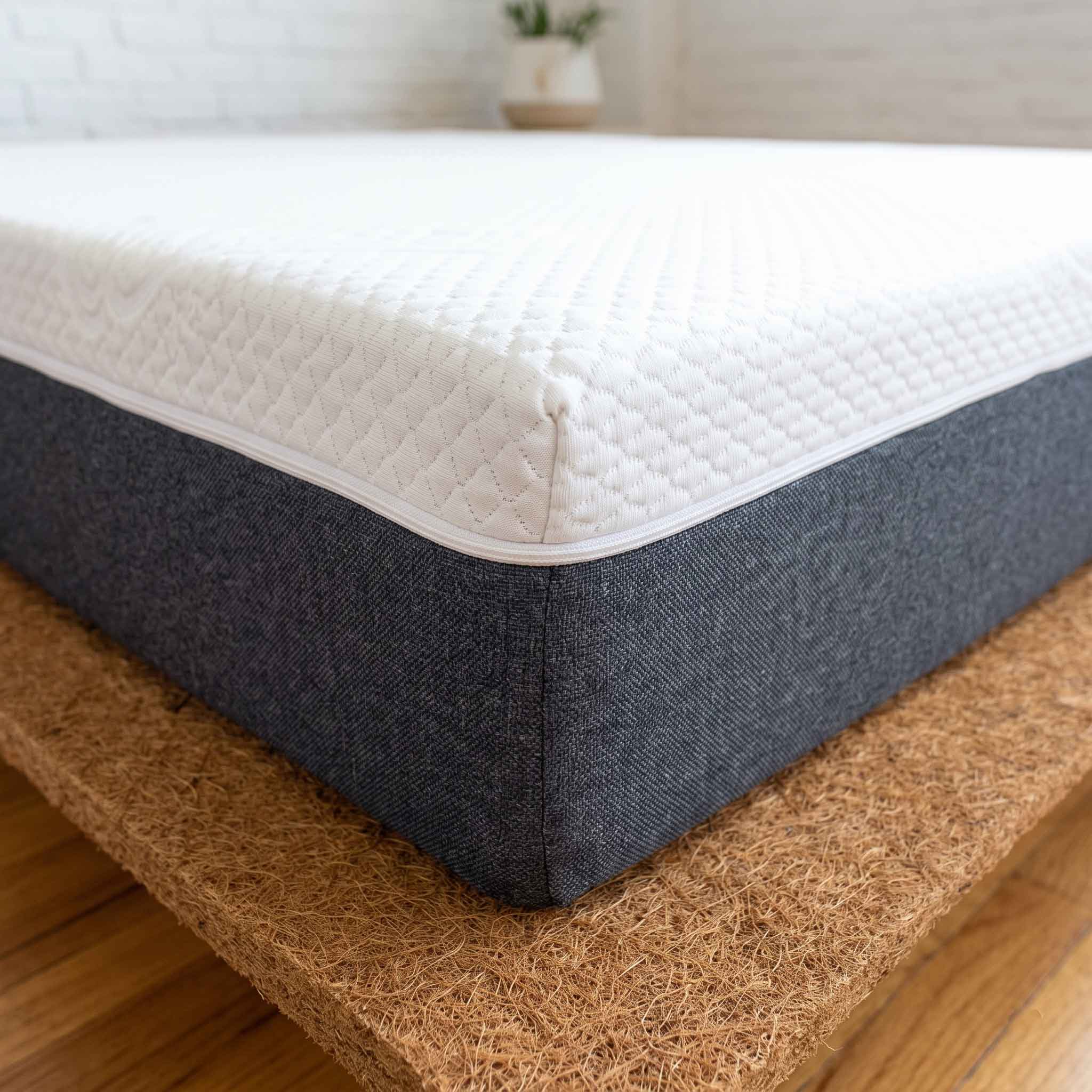
At MFC Latex Canada, the way we meet those requirements depends on whether you choose a wool or vegan mattress cover.
Why Do Mattresses Need a Fire Barrier?
Mattresses contain a large amount of material and are therefore subject to specific flammability requirements.
A mattress manufacturer can't simply choose to ignore those requirements because a mattress is natural, organic or made from latex. The finished mattress still has to comply with Canadian regulations.
The challenge for natural mattress manufacturers is finding a way to meet those requirements while minimizing the use of unnecessary synthetic materials or added fire-retardant treatments.
Can a Mattress Use Just a 100% Cotton Cover?
This is one of the most important distinctions when comparing natural mattresses.
A 100% cotton cover by itself will not pass Canadian mattress flammability requirements.
Cotton is a natural fibre, but it is also combustible. Simply wrapping a latex mattress in cotton does not provide an adequate fire barrier.
If a mattress manufacturer uses a cotton-only cover, another material or treatment must be incorporated into the mattress construction to allow the finished mattress to meet the required flammability standard.
That's why shoppers should look beyond claims such as “organic cotton cover.” The more useful question is: What is being used as the fire barrier?
Why Do We Use Wool?
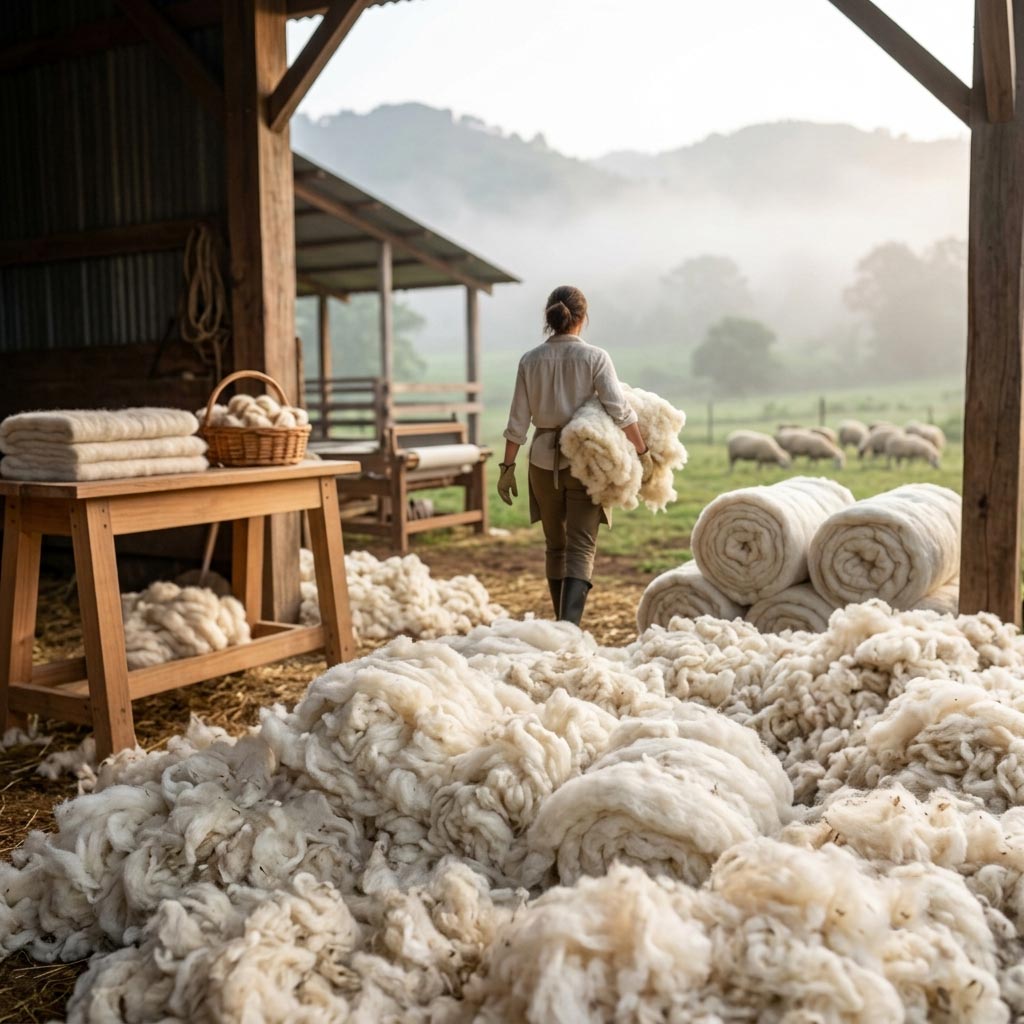
For our natural mattress covers, we combine cotton with wool.
Wool has natural fire-resistant properties. Unlike cotton, it is difficult to ignite, tends to self-extinguish and can form a protective char when exposed to flame.
This allows wool to act as a natural fire barrier in a mattress.
For our wool-covered mattresses, we don't need to apply an additional chemical fire-retardant treatment to the cover. The wool itself performs the fire-barrier function.
This is one of the reasons wool has been used extensively in natural and organic mattress construction.
Is Wool a Fire Retardant?
Technically, we prefer to describe wool as a natural fire barrier rather than an applied fire-retardant chemical.
Nothing is being sprayed onto the mattress to make the wool fire resistant. Fire resistance is an inherent characteristic of the fibre itself.
For shoppers looking for a mattress made with natural materials, this distinction matters.
Wool is the only natural material we use that provides the fire protection necessary for this type of mattress construction without requiring an additional fire-retardant treatment.
What About Vegan Mattresses?
A vegan mattress creates a different challenge.
Wool is an animal-derived fibre, so it cannot be used in a genuinely vegan mattress. At the same time, replacing the wool with 100% cotton isn't an option because cotton alone won't provide the required fire protection.
Our solution is a Tencel-based vegan cover combined with synthetic fibres that allows the mattress to meet its flammability requirements without applying an additional chemical fire-retardant treatment.
This means there is an important trade-off.
A wool mattress can use wool as its natural fire barrier. A vegan mattress eliminates animal-derived wool but requires some synthetic material in the cover construction to achieve the necessary fire performance.
For that reason, we don't describe our vegan covers as 100% natural or organic.
Does “No Added Fire Retardants” Mean the Same as “No Fire Barrier”?
No.
Every compliant mattress still needs to meet the applicable flammability requirements. The question is how the mattress achieves that performance.
A mattress may use wool, an engineered fabric barrier, synthetic fibres, an applied treatment or another compliant construction.
So when you see a mattress advertised as having “no added fire retardants,” it doesn't necessarily mean there is nothing in the mattress providing fire protection. It may simply mean that the manufacturer isn't applying a separate chemical fire-retardant treatment.
Understanding the actual materials is more useful than relying on the marketing terminology.
Wool vs. Vegan: Which Should You Choose?
If your priority is maximizing the use of natural materials, our cotton and wool cover is the better choice. Wool provides a natural fire barrier while also offering the moisture and temperature-regulating properties for which wool is known.
If avoiding animal-derived materials is the priority, our vegan cover eliminates wool. The trade-off is that synthetic fibres are required as part of the cover construction to meet flammability requirements.
The latex inside comparable wool and vegan mattress models can be exactly the same. The primary difference is the materials used in the cover and how that cover achieves the required fire performance.
What Should You Ask When Comparing Mattresses?
Instead of simply asking whether a mattress contains fire retardants, ask the manufacturer what material is being used to meet the required flammability standard.
If the answer is a 100% cotton cover with no wool, no synthetic fire barrier and no additional treatment, it's reasonable to ask for further clarification about how the finished mattress meets Canadian flammability requirements.
There is no need to hide the fire barrier in a well-designed mattress. It should simply be another clearly identified component of the construction.
At MFC Latex Canada, our approach is straightforward: wool provides the natural fire barrier in our wool mattresses, while our vegan covers use Tencel and synthetic fibres to meet the required fire performance without an additional applied fire-retardant treatment.

Leave a comment
This site is protected by hCaptcha and the hCaptcha Privacy Policy and Terms of Service apply.