



What Type of Bed Frame Do You Need for a Latex Mattress?
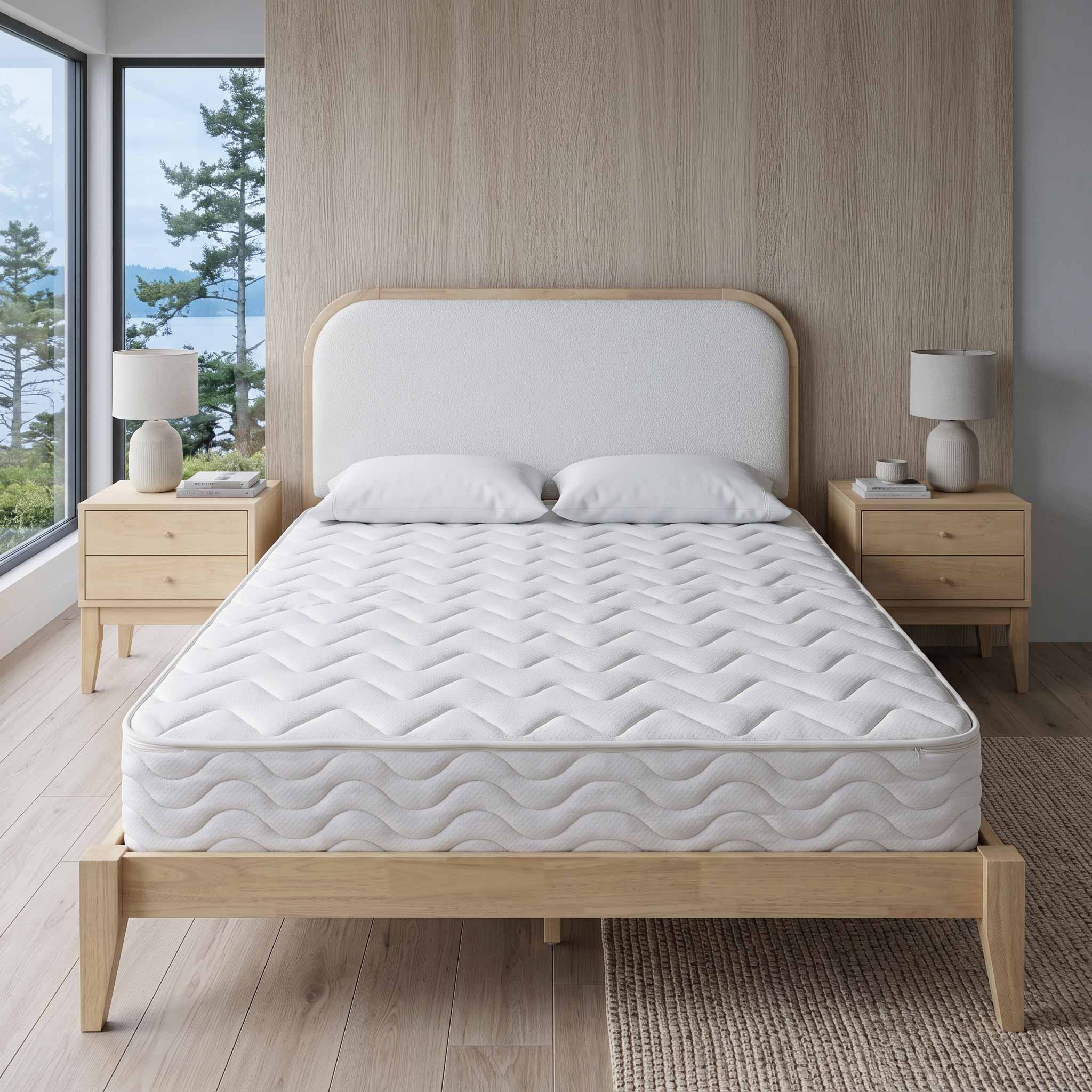
Choosing the right bed frame is an important part of setting up a latex mattress. In fact, we consider the mattress and foundation to be parts of the same latex sleep system.
Latex is heavier and more flexible than many conventional mattress materials. It performs best when it has strong, consistent support underneath it. A poorly designed foundation can allow the mattress to flex between supports, affect how it feels and potentially shorten its useful life.
The good news is that you don't need a special latex mattress frame. Most good-quality platform beds and slatted frames can work—as long as they provide the right support.
How Far Apart Can Bed Slats Be?
For an MFC Latex Canada mattress, slats can be spaced no more than 3 inches apart.
This prevents the flexible latex mattress from sagging or pushing excessively into the spaces between the slats. Closer spacing is perfectly acceptable. Wider spacing is not.
This requirement is particularly important with an all-latex mattress because the mattress doesn't contain a rigid internal structure. The flexibility that allows latex to contour so well to your body also means it follows the support surface underneath it.
How Wide Do the Slats Need to Be?
Spacing isn't the only measurement that matters.
The width of each slat must be within 1/2 inch of the distance between the slats.
For example, if the space between your slats is 3 inches, each slat should be at least 2.5 inches wide. If the slats are spaced 2.5 inches apart, they should be at least 2 inches wide.
This creates a more balanced support surface rather than alternating between very narrow pieces of wood and large unsupported gaps.
Maximum slat spacing: 3 inches. Minimum slat width: no more than 1/2 inch narrower than the spacing.
Why Is the Foundation So Important for a Latex Mattress?
Latex is naturally elastic. That elasticity is one of its biggest advantages as a mattress material. Latex compresses under your body, provides progressive support and quickly returns to its original shape when pressure is removed.
But that flexibility works in both directions. If there are large gaps underneath the mattress, the latex can flex downward into those spaces instead of being supported evenly across its surface.
A properly designed foundation allows the latex layers to perform as intended and provides a stable base for the mattress. That's why we don't view the bed frame as simply a piece of bedroom furniture. It's part of the mattress support system.
Do I Need a Solid Platform?
No. A solid platform can provide excellent support for a latex mattress, but it isn't required.
Properly spaced wooden slats work very well and have the added advantage of allowing airflow underneath the mattress.
What matters most is that the support surface is strong, stable and meets the slat width and spacing requirements.
Does the Bed Frame Need Centre Support?
Larger mattress sizes need adequate support through the middle of the bed.
For Queen, King and other larger sizes, the bed frame should have a strong centre support structure with appropriate support extending to the floor.
Without adequate centre support, the foundation itself can bow or flex under the combined weight of the mattress and sleepers. This is particularly important with latex because an all-latex mattress can be considerably heavier than a conventional mattress.
Can I Put a Latex Mattress on a Box Spring?
Traditional flexible box springs aren't necessary for latex mattresses.
Latex doesn't need the additional movement or springiness that a traditional box spring was designed to provide for older-style innerspring mattresses. A firm, non-flexing foundation is generally a better match.
If you already have a foundation, the important question is what's actually supporting the mattress. A rigid foundation that provides continuous or appropriately spaced support may work, while an old-fashioned flexible box spring generally isn't the ideal choice.
What If My Current Bed Frame Has Slats That Are Too Far Apart?
This is a common problem, particularly with modern bed frames designed for conventional mattresses.
You can add additional slats, replace the existing slat system or modify the support surface. But there is also a particularly simple solution: add a coir layer over the existing support system.
How Does Coir Help?
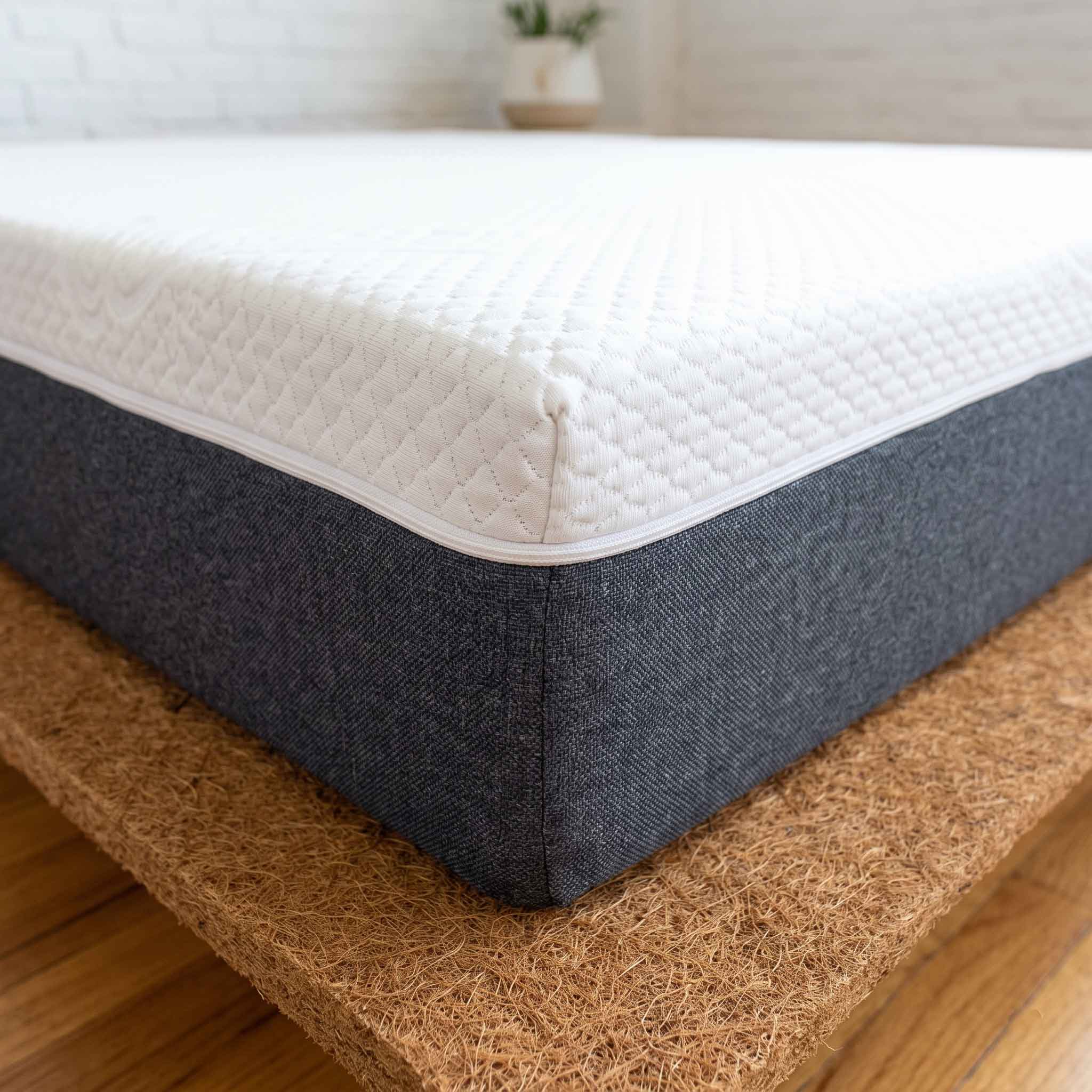
Coir is a firm, breathable material made from coconut fibre. A coir mattress pad or bunkie board can be placed between the bed frame and mattress to create a more continuous support surface.
This is especially useful when you already own a bed frame you like but its slat spacing doesn't meet the requirements for a latex mattress.
Rather than replacing the entire frame, coir can bring nearly any otherwise suitable bed frame up to MFC Latex Canada's warranty support standard.
It also maintains airflow underneath the mattress, making it a useful alternative to simply placing a solid sheet of material over the frame.
Can I Use Plywood Under a Latex Mattress?
Plywood can create a firm support surface, but it also significantly reduces airflow underneath the mattress.
For this reason, we generally prefer a properly designed slatted foundation or a breathable coir layer when additional support is required.
A coir layer provides support across wider gaps while retaining much more airflow underneath the mattress.
What About Adjustable Bed Frames?
Latex is particularly well suited to adjustable bases because of its flexibility.
Unlike mattresses containing rigid components, latex can bend and conform as an adjustable base changes position.
The adjustable base still needs to provide a suitable support surface, but the natural flexibility of latex makes it an excellent mattress material for an adjustable bed.
Do I Need to Buy a New Bed Frame for a Latex Mattress?
Usually not. If your existing frame is strong, stable and provides appropriate centre support, the first thing to check is the slat system.
Remember the two key measurements: slat spacing must be no more than 3 inches, and slat width must be within 1/2 inch of the spacing between the slats.
If the frame doesn't meet those requirements, it may be possible to add slats or use a coir mattress pad or bunkie board rather than replacing the entire bed.
The Foundation Is Part of Your Latex Sleep System
It's easy to spend a lot of time choosing the right latex type, firmness and mattress thickness while overlooking what's underneath the mattress. But the foundation has a direct impact on how well the mattress is supported.
A good latex mattress setup doesn't require a complicated or expensive foundation. It simply needs to be strong, stable and evenly supported.
For MFC Latex Canada mattresses, keep slat spacing to a maximum of 3 inches, make sure the slats themselves are appropriately wide, and provide proper centre support where required.
And if a bed frame you already own doesn't quite meet those requirements, adding a breathable coir support layer can often solve the problem without requiring an entirely new frame.



Leave a comment
This site is protected by hCaptcha and the hCaptcha Privacy Policy and Terms of Service apply.