

What Is the Difference Between a 100% Latex and Hybrid Latex Mattress?
Latex mattresses generally fall into two main construction styles: 100% latex and hybrid latex. Both use real latex foam in the sleeping surface, but what sits underneath those comfort layers is very different.
A 100% latex mattress uses latex foam as both the comfort system and the support core. A hybrid latex mattress combines one or more latex layers with a pocket coil support system.
That difference affects feel, weight, airflow, edge support, adjustability and price. Neither design is automatically better; the right choice depends on what you want from your mattress.
What Is a 100% Latex Mattress?
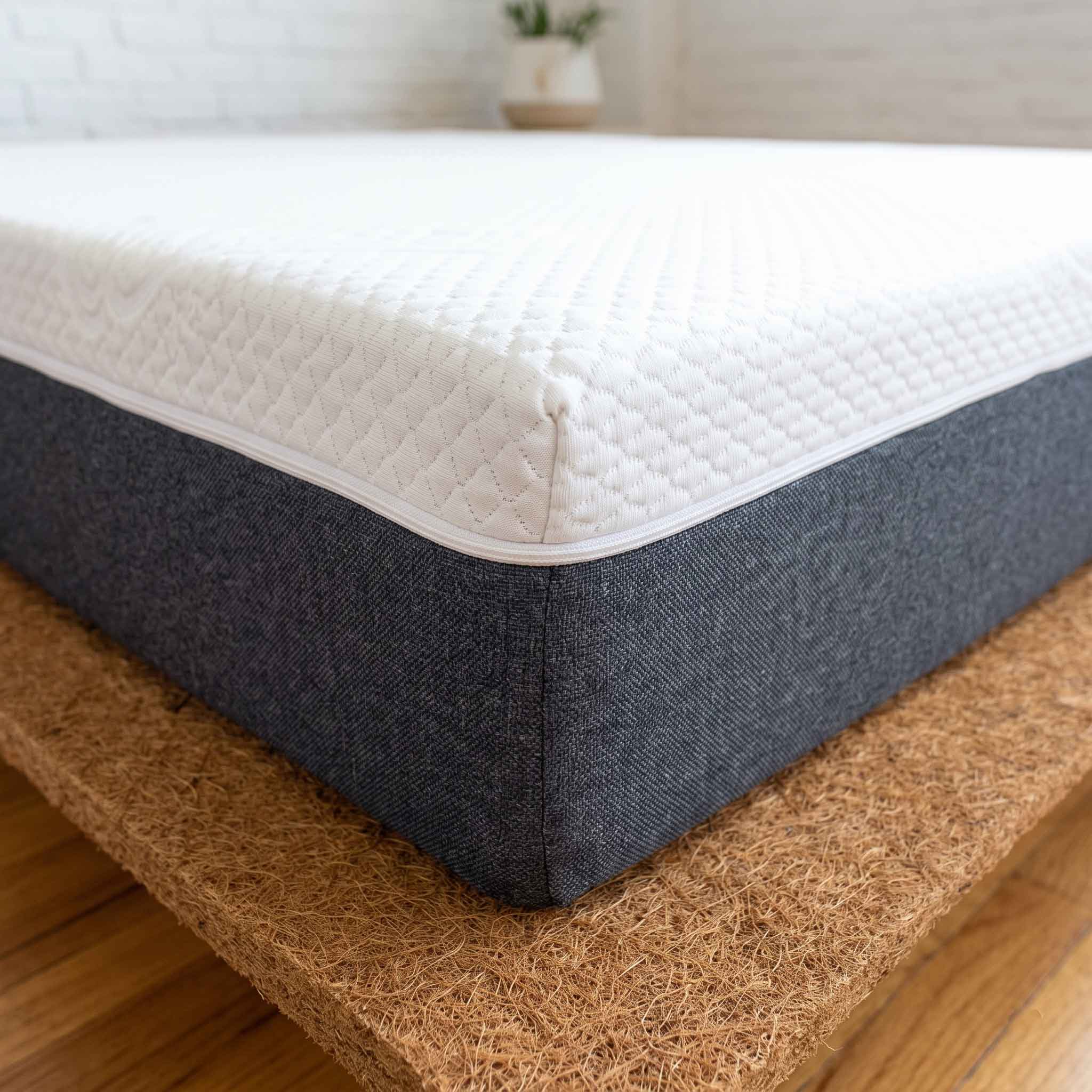
A 100% latex mattress is built with latex foam from top to bottom rather than using a spring or polyurethane foam support core. Depending on the mattress, it may use Dunlop latex, Talalay latex or a combination of the two.
Latex is naturally elastic and supportive, so it can perform both jobs within a mattress. Softer latex can provide pressure relief near the surface, while firmer and denser latex can create the underlying support system.
The result is a substantial, highly responsive mattress with a consistent latex feel throughout its depth. Many all-latex mattresses also use multiple removable layers, allowing the firmness or configuration to be adjusted without replacing the entire mattress.
What Is a Hybrid Latex Mattress?
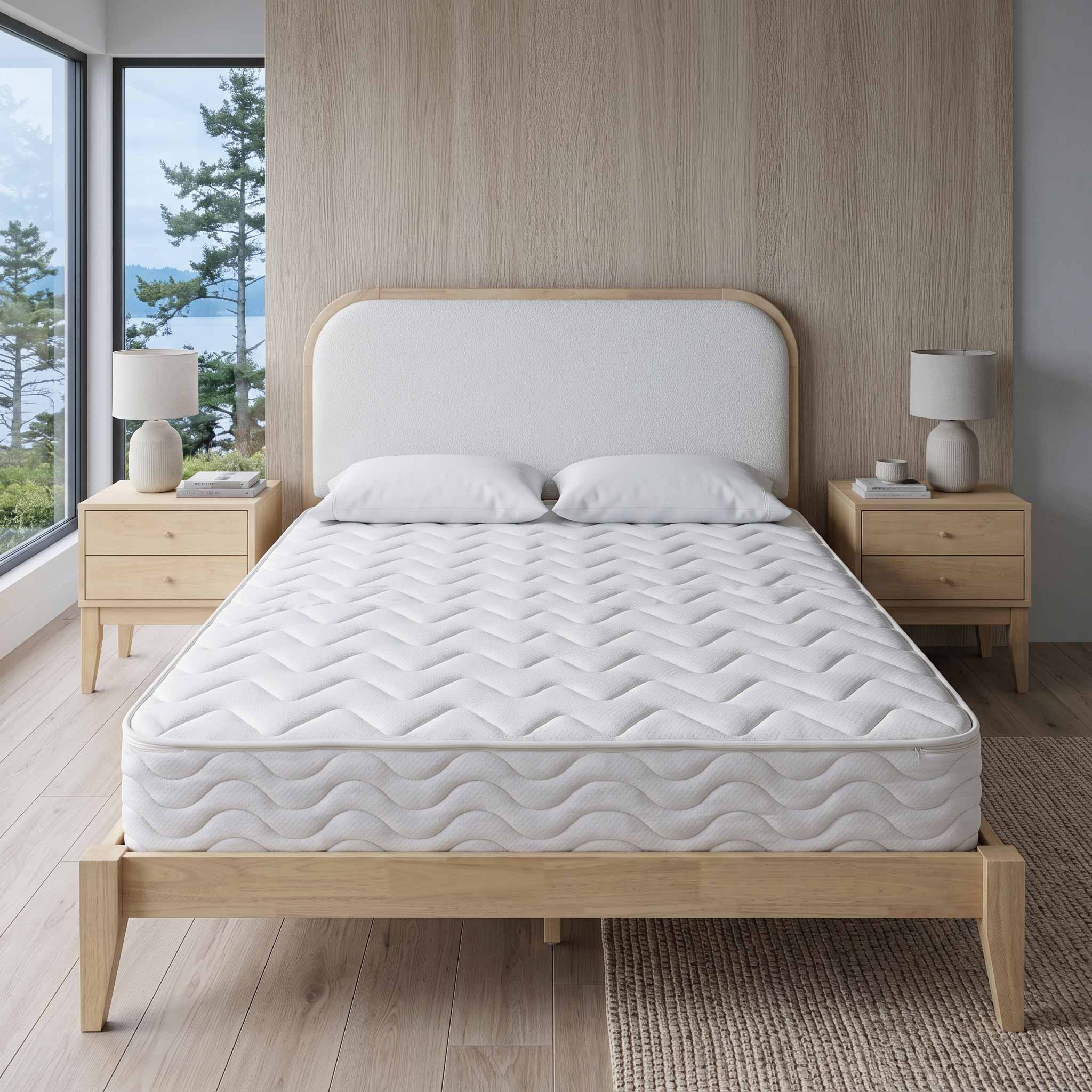
A hybrid latex mattress replaces the all-latex support core with a pocket coil system. Latex is then used above the coils as the comfort and, in some designs, transition layers.
At MFC Latex Canada, a true latex hybrid typically uses 2 to 4 inches of latex over the pocket coils. This is worth checking when comparing mattresses because some products marketed as latex hybrids may contain only a very thin layer of latex along with other conventional foams.
The pocket coils give the mattress a familiar buoyant feel and provide strong underlying support. Because each coil can respond independently, pocket coil systems can also contour to the body while limiting motion transfer compared with traditional interconnected springs.
How Do They Feel Different?
The most noticeable difference is the way the support system responds underneath you.
A 100% latex mattress has a dense, substantial and elastic feel. The support comes entirely from latex, so there is no spring unit underneath. The mattress compresses and rebounds as one layered foam system.
A hybrid combines the responsiveness of latex with the movement of pocket coils. The springs add buoyancy and can make the mattress feel a little more familiar to someone transitioning from a conventional spring mattress.
The exact feel still depends heavily on the type, firmness and thickness of the latex used. A soft Talalay hybrid, for example, can feel very different from a firm Dunlop hybrid even though both use pocket coils.
Which Has Better Edge Support?
Hybrid mattresses generally have the advantage in edge support. A pocket coil system can use firmer coils around the perimeter to reinforce the sides of the mattress.
An all-latex mattress relies on the latex itself for edge support. Firmer latex can provide a very stable edge, but it will usually compress more progressively than a reinforced coil perimeter.
For people who frequently sit on the edge of the bed or want the sleeping surface to feel especially stable from side to side, a hybrid can be appealing.
Which Sleeps Cooler?
Both latex constructions are breathable compared with many conventional foam mattresses. Latex has an open structure and does not have the slow, heat-retaining feel commonly associated with memory foam.
A hybrid can provide an additional airflow advantage because much of the mattress interior is open space around the pocket coils. Air can move more freely through the support system than through a solid foam core.
That does not mean an all-latex mattress necessarily sleeps hot. Bedding, mattress covers, room temperature and the sleeper all play a major role in temperature regulation.
Which Is More Durable?
High-quality latex is one of the most durable cushioning materials used in mattresses, which gives both designs the potential for a long service life.
A 100% latex mattress has a particularly simple construction with no spring system. In a modular design, individual latex layers may also be rearranged or replaced as comfort preferences change or a layer eventually wears.
A quality pocket coil system can also be very durable. With a hybrid, however, long-term performance depends on both the latex comfort layers and the coil unit underneath them.
The quality and amount of latex matter in either construction. A mattress containing several inches of quality latex should not be compared directly with a product using only a token layer of latex for marketing purposes.
What About Motion Isolation?
Both constructions can isolate motion well, but they do it differently.
Latex absorbs and disperses movement without the slow response of memory foam. In a 100% latex mattress there is no spring system to transfer movement through the support core.
Pocket coils are individually wrapped and move more independently than traditional interconnected springs, so a well-designed latex hybrid can also provide good motion isolation. A hybrid may feel somewhat more lively because of the added spring response.
Why Are Hybrid Latex Mattresses Usually Less Expensive?
Latex is a relatively expensive mattress material, and a 100% latex mattress requires much more of it. Replacing a thick latex support core with a pocket coil system reduces the total amount of latex needed.
This generally makes a hybrid less expensive while still allowing the sleeper to experience latex in the layers that have the greatest direct effect on surface comfort.
It also makes hybrids lighter and easier to move. A thick all-latex mattress can be extremely heavy because latex is a dense material.
Does “100% Latex” Mean 100% Natural Latex?
No. This is an important distinction when comparing mattress descriptions.
When we describe a mattress as a 100% latex mattress, we are referring to its construction: the mattress uses latex rather than coils or another foam as its internal support material.
That is separate from the composition of the latex itself. Latex foam can be 100% natural, synthetic or a blend of natural and synthetic rubber. A mattress can therefore be “100% latex” in construction without every latex layer being 100% natural rubber.
When natural material content is important, check both the mattress construction and the specific type of latex used.
Which Should You Choose?
Choose a 100% latex mattress if you want maximum latex content, a dense and substantial feel, excellent durability and the potential flexibility of a layered all-latex construction. It is also the natural starting point if you specifically want to avoid a spring support system.
Choose a hybrid latex mattress if you like the buoyancy and edge support of pocket coils, want increased airflow, prefer a mattress that is easier to move or want to reduce cost while still sleeping directly on quality latex.
There is no universal winner. A well-designed hybrid can be a better fit for one sleeper while an all-latex mattress is ideal for another. The amount and type of latex, firmness of the comfort layers, support system and overall construction are more useful considerations than assuming one category is automatically superior.


Leave a comment
This site is protected by hCaptcha and the hCaptcha Privacy Policy and Terms of Service apply.